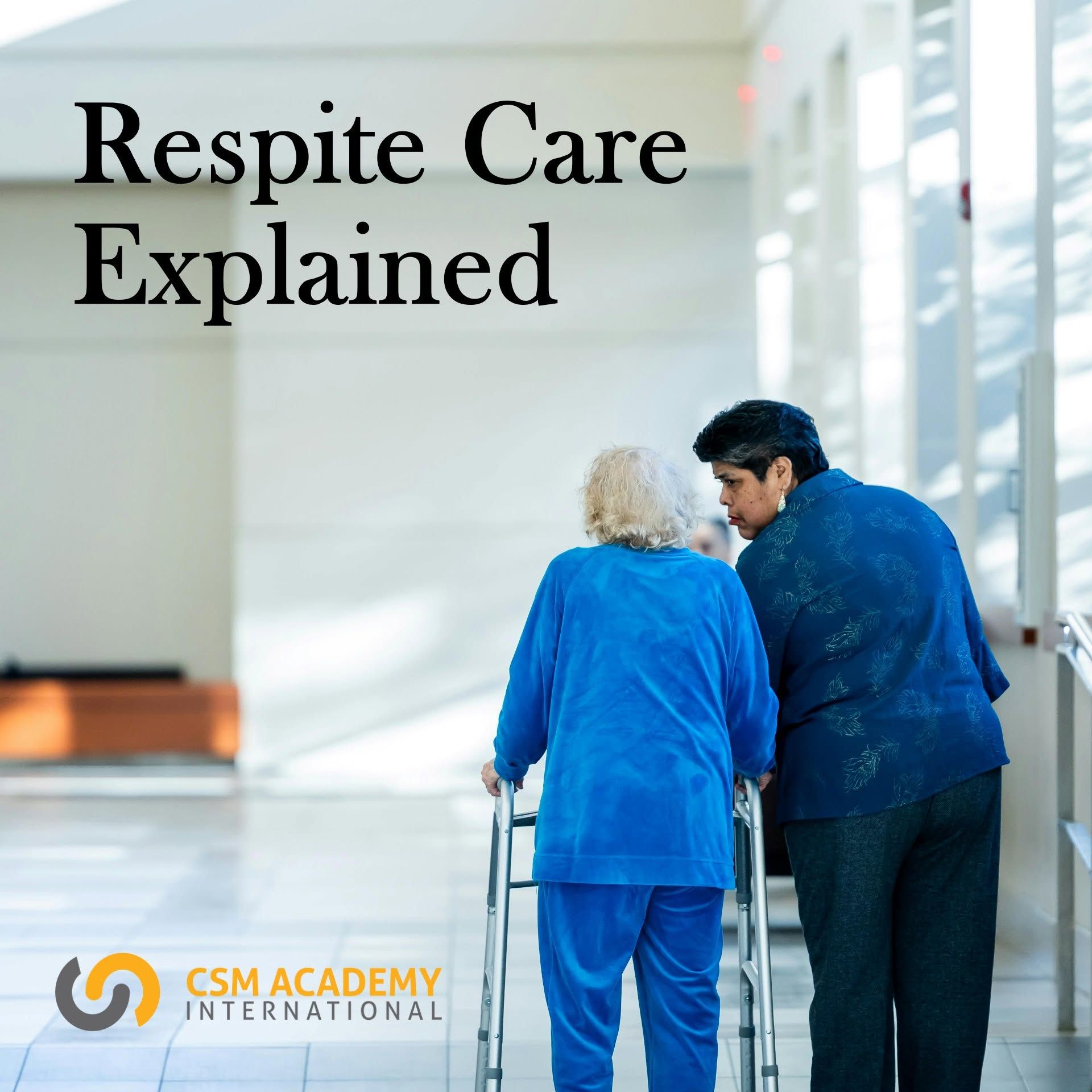
Respite Care Explained
Respite Care Explained
- by Allan Lee, COO CSM Academy International
Respite care is a short-term care service designed to give primary caregivers a temporary break from their caregiving responsibilities. It is most commonly used when caring for elderly individuals, persons with disabilities, or patients with chronic illnesses or dementia who require ongoing support and supervision.
Caregiving, while meaningful, can be physically and emotionally demanding. Over time, continuous caregiving without rest may lead to burnout, stress, and even health issues for the caregiver. Respite care provides relief by ensuring that the person receiving care continues to be supported in a safe and professional environment while the caregiver takes time to rest, attend to personal matters, or simply recharge.
Respite care can be delivered in various settings. It may take place at home, where a trained & qualified caregiver temporarily steps in, or at a healthcare facility such as a nursing home or day care centre. Services typically include assistance with daily living activities such as bathing, feeding, medication reminders, and companionship. Depending on the needs of the care recipient, respite care can last for a few hours, several days, or even longer.
Importantly, respite care is not just beneficial for caregivers—it also supports the well-being of the care recipient. It introduces them to new social interactions and environments, which can enhance their emotional and mental health.
In today’s ageing society, respite care plays a vital role in sustaining long-term caregiving. It allows caregivers to continue providing quality care without compromising their own well-being. Ultimately, respite care is not a luxury, but a necessary support system that ensures both caregivers and care recipients can thrive.
Looking for Respite Care? You should check out Charis Manor. www.charismanor.com or speak to me at allan@csmacademy.edu.sg