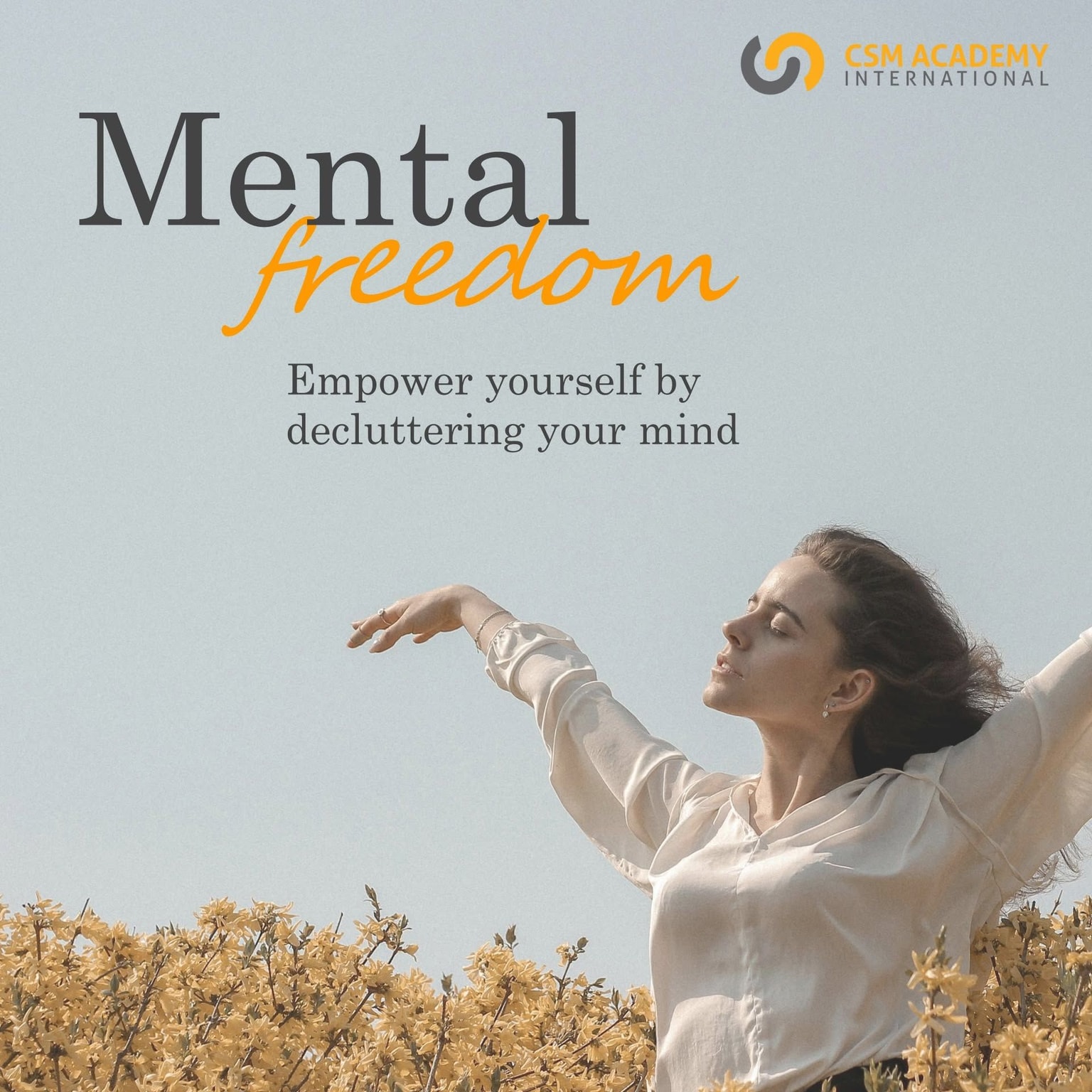
Mental Freedom: Letting Go
Mental Freedom: Letting Go
- by Allan Lee There comes a point in life when I realise that the heaviest burdens I carry are not always physical — they are the thoughts, expectations, and memories I hold on to. Mental freedom is not about having a perfect life or escaping responsibilities. It is about releasing what weighs me down so I can finally breathe, think clearly, and live with intention. Here are some of the things that I learnt through my own experience.
Firstly, mental freedom begins with awareness. I used to move through my days on autopilot, reacting to stress, replaying old conversations, and worrying about what comes next. My mind becomes crowded, and in that noise, I lose myself many times. Awareness invites me to stop for a moment and ask: What am I holding on to? Often, the simple act of naming my emotions loosens its grip.
The next step is letting go — gently, not forcefully. Letting go does not mean forgetting the past or ignoring pain. It means learning to loosen the emotional attachment that keeps me stuck. I let go of the need to be right all the time. I let go of the pressure to meet everyone’s expectations. I let go of mistakes that no longer define who I am today. In that release, space opens for something lighter to enter.
Then I want to talk about personal boundaries. Mental freedom also grows through boundaries — the quiet courage to protect my peace. Life had taught me that saying no is not selfish. Choosing rest is not lazy. Distancing myself from negativity is not unkind. Boundaries reminded me that my well-being matters just as much as the demands placed upon me.
Many people – including me – live in mental prisons they created themselves, with harsh self-talk, guilt, and the constant feeling of not being enough. Mental freedom comes when we treat ourselves with the same compassion we so easily extend to others. When we forgive ourselves, we stop living in yesterday and begin living in today.
I have learnt that true freedom is found in small, ordinary moments — the morning silence, a shared laugh with a colleague, a commute without rushing, a deep breath that reaches the lungs. When I return to the present, my worries lose their power, and regrets lose their voice.
Achieving mental freedom is not a one-time event. It is a lifelong practice, a gentle commitment to choose clarity over chaos, peace over pressure, and authenticity over approval. People do not arrive at freedom; people grow into it, slowly, steadily, one decision at a time. When I finally experience it, even for a moment, I realise something simple but profound: “Mental freedom isn’t about changing the world around me — it’s about changing the world within me.”
And once the mind is free, life feels different. Lighter. Fuller. Truly my own.
PS: This article is not AI-generated, and no AI is harmed in the process.
About the Author: Allan Lee, Chief Operating Officer of CSM Academy International, is a leader shaped by resilience, purpose, and a deep commitment to mental health advocacy. Having journeyed through and been discharged from bipolar disorder a decade ago, Allan brings a rare combination of professional excellence and lived experience to the healthcare education sector.
His personal journey fuels his belief that mental wellness is not plainly important — it is essential for sustainable leadership, compassion, and human-centric workplaces. As an active advocate for mental health awareness and stress management, Allan champions practical, empathetic approaches that empower individuals to thrive both personally and professionally.
Today, he leads CSM Academy International with clarity, empathy, and conviction, driving the organisation’s mission to uplift healthcare professionals while promoting a culture of wellness, authenticity, and resilience.